Showing posts with label AI. Show all posts

Friday, 4 May 2018

SPEAKER INTERVIEW: DR NADINE STECH


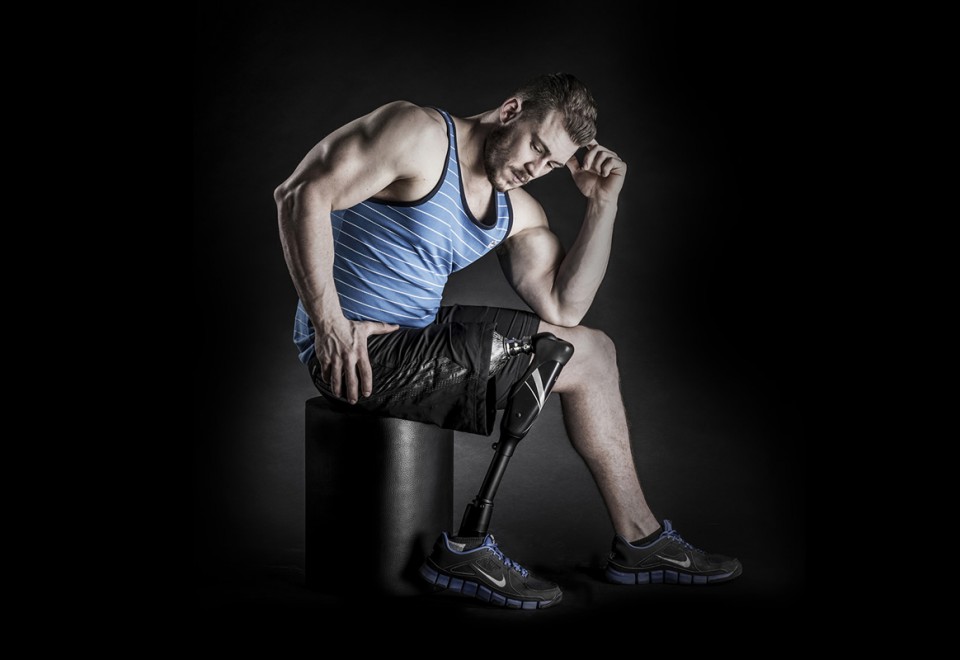
Dr Nadine Stech is Principal Integrated Control Design Engineer at Blatchford, a world leading manufacturer and rehabilitation provider with expertise in prosthetics, orthotics, special seating and wheelchairs. 

She is project champion of the multi-award winning fully integrated, microprocessor controlled lower limb prosthesis Linx - awards include the MacRobert Award of the Royal Academy of Engineering 2016, German Design Award Winner 2017 and Medical Design Excellence Awards 2017 - Gold Winner and Best in Show.

Don’t miss her talking about Linx at The Engineer Conference at 1215 on Wednesday 6 June.  We caught up with her before her session to talk about all things robotics, AI and diversity.

What does Linx do that previous prosthetic limbs couldn't? 
Linx is an electronically integrated lower limb system. It allows the communication and data exchange between prosthetic knee joint and prosthetic foot joint. This enables coordination of both joints instead of isolated, individual joint responses to gait events.

How does this translate for patients? 
The inter-joint communication allows for additional functionality and safety. A prime example is the ramp descent mode that allows transfemoral amputees to walk down a moderate ramp leg-over-leg instead of yielding down or avoiding ramps.

How did you overcome those limitations to take things to the next level? 
The first step was to understand the biomechanical requirements. This was then translated into a system integration approach that enabled inter-joint communication and additional functionality. 

What's next? How can prosthetics be developed even further and how will AI and robotics be involved in that progression? 
The key areas are improvements to the human-machine-interface (HMI), system integration (such as integrating the socket into the limb system) and application of power where required. AI and robotics naturally lead themselves to be integrated into prosthetics.

How important is it for engineering to have a diverse workforce? 
Engineering is becoming more and more a multidisciplinary effort involving specialists in areas like materials, electronics, mechanics and software with different perspectives and knowledge. A diverse workforce allows finding a better solution for an engineering problem.

There are 20,000 women keen to get back into engineering after leaving to have children - what do you think industry and/or Government should be doing to entice them back? 
There are two main areas: firstly, refresher courses: Technological knowledge gets outdated very quickly. Refresher courses in very specific, specialised areas would be beneficial. This would allow to regain confidence which is a prerequisite for a successful re-integration into the workforce. And, secondly, a good framework and enough support to allow a healthy family-work balance.


Thursday, 3 May 2018

Don't be bamboozled by Blockchain

Still bamboozled by Blockchain and what it means for manufacturing? Don't be says Fujitsu's Graeme Wright. We interviewed him ahead of his presentation at The Engineer Conference, which takes place 5-7 June as part of Subcon. 

1.              Isn't Blockchain just a fad?
Put simply – No.   Blockchain is all too often confused with crypto-currencies; they just are one solution built on the technology.  Blockchain offers a fundamentally new approach to sharing information between people and organisations – one that is built on trust and by sharing the ledger (list of records) enforces an immutable statement of truth that can be therefore be used to ensure security.   On top of that, with the ideas of smart contracts allows machine to machine transaction (contracts) to be executed automatically.
2.              How can Blockchain be used in manufacturing? 
There are so many ways – but for just one example - think of the costs involved in managing the supply chain and ensuring provenance – Blockchains with smart contracts can automate these processes, reduce the cost to marginal levels and ensure that a company’s resources are focused on the value-added tasks so increasing productivity at lower cost.
3.              What are the benefits? 
The benefits will depend on the exact use case as per the one described above.   However, the key benefits of Blockchains can probably be summarised ultimately as reductions in cost, increased provenance across complex supply chains, and increased security especially for connected products,   
4.              What are the risks for people who ignore it?
Without being flippant – it would be not to have the benefits mentioned – but what that means is not having full traceability and provenance – which may lead to inferior products.  E.g. imagine if a supplier of components used NFC or RFID tags that were registered in a Blockchain on each component.  A business would know that every component was genuine and the trust would be part of the shared ledger so fake products could not be added to the ledger.  If a product recall was needed or a customer needed a replacement then this could be done simply and at low cost whilst also ensuring consumer continued to get the product quality they bought.  The spare/replacement parts market is often very large and ensuring consumers get the right replacement parts that keep warranties valid is a massive challenge.    I also believe this could be used to overcome certain tax – import/export issues.
5.              How important is it for engineering/manufacturing to have a diverse workforce and what can Industry/Government do to help? 
There are so many facets to that question – I think from a socio-political perspective it is very important – however, I also think that from an innovation perspective it is very important.   The last thing business need is everyone having the same type of background, gender, cultural, etc. as this limits the ability to new ideas.   This is well documented as a way in which good businesses fail.   How can Industry/Government help?  - Keep pushing the diversity and inclusion agenda – but be careful not to discriminate against those to have experience as well.   Whilst we all know that the next generation bring great insight by challenging the status quo and asking the question ‘why wouldn’t we do it this way?’ or something similar; whilst not accepting answer ‘we have always done it this way’.   However, experience has a lot of value as well – mistake we have all made are lessons we can all learn from.   The point here is to ensure people are treated equally – but putting hard metrics that must be met out of context can be less than optimal if not dangerous.  
6.              What would you put in Engineering Room 101?
A difficult one. I think connector leads, particularly HiFi/TV leads.   They just create a mess of wires, you never have the right ones or the right length and working out what goes where can be a challenge for many.   I think with the wireless technologies we have today; it is the start of the end for wired connectors and not before time.