Showing posts with label The Engineer Conference. Show all posts

Tuesday, 7 May 2019

Interview with Elizabeth Donnelly - WES


WES is 100 years old in June - congratulations - tell us why you were founded all those years ago, if and how you have achieved your goal, and what progress has been made in that time? 

Thank you! WES was founded in 1919 in response to the pressure women were put under at the end of the First World War to leave the workforce to release jobs for men returning from the forces. These women founded WES, not only to resist this pressure, but also to promote engineering as a rewarding job for women as well as men.

Our objects haven’t changed in that time. WES was established to promote the education, training and practice of engineering among women, to advance the education of the public concerning the study and practice of engineering among women, and to relieve poverty amongst women in engineering. We are still promoting these objects, though 100 years ago WES was emphasising that women could be engineers, now our focus is more that women should be engineers, and we relieve poverty by helping women into work. 

So, what's next for WES? What are your future goals? 

We want to continue to support women in engineering as our greatest strength is our network, and we are still making history. We held the first Women Apprentices’ Conference in 2018 and it was such a success we want to run this annually from now on. We also formed the University Group Board last year to support our Student  Groups and we are looking at forming Cluster Groups to support BAME women engineers and Retired Engineers.

We have also announced a Census into women’s experience in engineering, and in future we hope to be the repository for a lot of research on women in engineering. And we are continuing with International Women in Engineering Day on the 23 June 2019, our 100th birthday, which we launched five years ago, as well as celebrating the Top 50 Women in Engineering for the fourth year, with the theme of Current and Former Apprentices this year.

You did some research a couple of years ago that stated around 20,000 women had left the workforce to have children now wish to return. Has that number diminished or grown? What are/can businesses/industry/the Government do to facilitate their return? 

I don’t have the current figures, but we started STEM Returners in an effort to make it easier for women to return from career breaks. We advise businesses to pilot “returnships” to ease returners back into the workplace and get their skills up to date. In these times of 24/7 manufacturing, every job is part-time and if employers can arrange working times to suit women’s childcare arrangements, then women are more likely to stay for a long period.

There are many other things that help recruit women – we have a gender decoder for job ads and it’s been shown that ads that are “masculine-coded” are more likely to put women off applying. Websites that feature only men deter women from applying to those companies, and often women will only apply for a role where they fit the essential criteria 100%, whereas men will apply if they fit 60% - and get the job. Companies are missing out on talented staff as a result, so WES encourages employers to say, “if you fit three of the following criteria, please apply”. We also want employers to say that they welcome applications from women.

Why is it important for the engineering industry to employ (more) women? 

Women are more holistic, so we look not just at the problem in front of us, but at its wider context. More importantly, the absence of women in engineering creates a lot of problems for women in the rest of their lives. Caroline Criado-Perez has written about this in her book Invisible Women. Crash test dummies are usually modelled on men, meaning women are more likely to be injured than men in traffic collisions; medicines are tested on men and not women, when women respond differently; mobile phones are designed for male hands, so women find it difficult to use them single-handedly, and a recent health app made no mention of periods – something that affects 50% of the population at some point in their lives. Bringing women into engineering brings variety into engineering. I remember Ashby’s Law of Requisite Variety from my systems studies – you must have as much variety in your organisation as the population you serve.

Our industry survey asked if 'enough is being done to attract women into engineering'? The results this year or almost identical to last year. However, fewer people (28% compared to 22%) believe Government and business need to be doing more - why do you think that is? 

I think that the campaigns to get more women into engineering have been more visible and there may be a sense that the “job is done”. However, it takes years to build a pipeline of women in engineering and we must keep pushing.

 When I went to university in the late 1980s, there would be one or two women studying for an engineering degree. These women are just now beginning to take senior roles because it takes up to 30 years to get to the right stage in a career – we have just seen Air Marshall Susan Gray become the highest ranked woman in the military ever. And if women took career breaks it will take a little longer. So, we are seeing a few women reaching the top of engineering, with more women coming through below. It’s still not enough, barely 12% of all engineers are women, so we need to keep attracting women into engineering.

We also asked 'What do you think needs to be done to encourage more women to consider manufacturing or engineering as a career?' One of the options was 'no more needs to be done'. Last year, 7% of respondents opted for this. This year, 54% had. Why do think that's the case? 

For similar reasons as above. There is a greater focus on gender pay gaps, on women in the workplace, and now that women are becoming more visible through campaigns such as “#MeToo” there is likely a backlash. Men are having to reconsider their workplace behaviour and it’s easier to say they don’t want any more women than to change the culture.

What do women bring to engineering that's different to men?

Women bring collaboration and teamwork, attention to detail and a willingness to ask questions and possibly fail. If engineers don’t make mistakes, they don’t make anything, and I think women are much more likely to say, well, that didn’t work, let’s try something else, whereas men might be less inclined to admit they got something wrong.

Engineering is much more collaborative now and we are finding that women succeed in newer fields such as environmental engineering and where more than one area of engineering overlap, e.g. Mechatronics – electronics in mechanical vehicles. A good friend of mine has just set up her own company and her expertise is in mechanical, aerospace and chemical engineering, which means she can provide a great deal for her customers.

What’s your personal experience of being a female engineer at Rolls Royce?

I wasn’t an engineer at Rolls-Royce, I was an adviser on lobbying government to support the trade unions at Rolls-Royce. I used my systems engineering background to devise a strategy with the government to get three new factories built in the UK and secure 800 jobs.

Did your gender create obstacles that weren’t there for male colleagues?

Well, having to go outside the building across a site road to another building for the loo was an experience! I don’t think it’s my gender that created obstacles, I think that obstacles are there for women because men don’t encounter the same experiences and don’t think about it.

I’ve spent my life among men. I have three brothers, and there are only 3.5 years between all four of us. I’ve worked in male-dominated industries like IT, politics and engineering all my life, so I’m used to hitting obstacles. I was a Board Member of the East Midlands Regional Development Board in charge of millions of pounds of public money, surrounded by very powerful Council Leaders and leaders of industry (some of them women) and I was asked why I wasn’t more recognised. In the course of the discussion that followed, a man commented, “it’s because good men get promoted and good women get side-lined”. I have found that to be the case, so I’ve generally just found a way round it.

It has been very difficult at times, though, and not every woman wants to be a trailblazer or a role model, they just want to do their job. At the time it didn’t feel like trailblazing or role modelling, but it seems I did do that. This led to quite a patchy CV, so it was important that I construct a narrative that explained my progression. Men often just have a logical career progression which is easily explained. 

What advice would you pass onto young women engineers just entering the profession?

It’s a great field. If you like problem-solving and working on your initiative, it’s a great career and you’ll never be bored. Build you network, because you never know when contacts from years ago will be useful in the future. Join WES as a Student or Apprentice and maintain your membership because we provide a great network from early career to retirement. Get your Chartership because it shows that you have the expertise necessary to do your job and will get you respected. Apply for jobs you want even if you don’t think you can do them. Pursue every opportunity you get, don’t take no for an answer and follow your curiosity. The field of engineering is changing, and you want to be at the cutting edge.

Every year the age where women first encounter sexism gets higher and for many women I hope they won’t encounter it at all. 

What role can senior, male engineers play in driving gender diversity?

A lot! We instituted a Men As Allies Award in 2017 and we award it to the man who has encouraged women into engineering.

Men have always helped women get into engineering, and some of our very first Associate Members were men. Join WES! Get your company to partner with WES!

Employ more women, it will help your gender pay gap and your need to have more women on your Board.

Change your recruitment process, and if you see a woman on a shortlist, try to make it a conversation rather than an inquisition.

If you see a young woman that you believe can be excellent, then mentor her, promote her to your colleagues, give her opportunities to shine, support her in meetings and don’t let her male colleagues take her credit.

Finally, all this will benefit your bottom line – we know that mixed teams work better than either male or female-dominated teams.

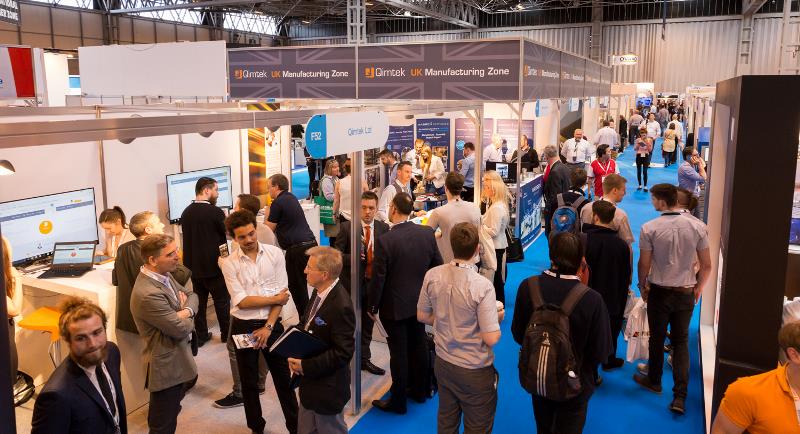
The Engineer Conference takes place 4-5 June at NEC, Birmingham, and is co-located with Advanced Manufacturing, The Engineer Expo and Subcon. Register now for a free visitor pass HERE.


Monday, 29 April 2019

Interview with Brian Holliday - Managing Director Siemens Digital Industries


You’re presenting the keynote at this year’s Engineer Conference, please tell us a little more about this.

My intention is to offer some insight into the benefits of industrial digitalisation, to look beyond the hype to the company, employee and economic benefits of embracing digital technology and to explore some practical examples in Edge Computing, AI and Cloud Technology to name a few.

How do digitalisation, digital twinning, industry 4.0, etc, have the potential to improve the productivity and efficiency of UK manufacturing?

Industry 4.0 (the digitalisation of industry) represents the world’s next industrial productivity leap and again it’s derived from technological progress. This time, it’s all about data and the unprecedented networking of humans and machines. It will continue what we’ve started, with tools that augment both human physical and intellectual effort augmenting current levels of automation in industry.

Digital twins are already much more than geometry-based CAD models - they help us rapidly design, prototype and deploy both products and production plants in the virtual world helping to avoid much of the cost associated with traditional new product introduction or plant investment (without the downtime) – but also, digital twinning enables a faster time to market which in turn means competitiveness. Much of the value of the digital twin is yet to be widely realised – namely the digital twin of the performance of machines, plants and supply chains. This is where the IOT connectivity that we increasingly expect, enabled by MindSphere and Industrial Edge, connects a wealth of industrial data to increasingly advanced applications that help improve our insight to performance and enable us to act on it. This could mean a predictive failure intervention or use data to improve a product design or the enablement of a completely new business model.

Industry 4.0 is a global race – it’s about building unprecedented agility into what we do - it offers significant opportunities if we embrace it and the threat we’ll fall behind if we don’t.

Sum up the Made Smarter vision in one sentence?

Made Smarter is all about the UK embracing the fourth industrial revolution so we can dramatically improve our manufacturing productivity, growth and high value jobs footprint – all of which sets us up for a leading role in the future of manufacturing.

How far along the road are we to achieving this vision?

We’ve made a good start and there are pockets of excellence, although we must catch up given how little we automate in comparison with other industrialised nations today.
We’re becoming more joined up as industry, government and the innovation community and we’re starting to realise the benefits, at the same time as starting to help take the long tail of smaller manufacturers with us through the Made Smarter north west pilot. The North West was chosen because it represents much of our manufacturing and industrial activity and the institutional stakeholders there were willing participants when it came to collaboration and the support required to set up and scale such an innovative intervention.  

What are you most looking forward to at The Engineer Conference and Expo
this summer?

I am looking forward to spending time in detailed debate with my peers; with those in the industry who are trying to unpick and solve productivity problems through technology. This is a leading-edge discussion for engineering and one of our major challenges for the 2020s.

The Engineer Conference takes place 4-5 June at NEC, Birmingham, and is co-located with Advanced Manufacturing, The Engineer Expo and Subcon. Register now for a free visitor pass HERE.


Monday, 22 April 2019

Interview with Dr Nick Hawker - CEO First Light Fusion


Dr Nick Hawker is CEO First Light Fusion. At The Engineer Conference in June, he is presenting ‘Projectile Fusion: A New Approach To Fusion Power’ on 4 June at 13:30. We caught up with him before the show to ask all about his nuclear fusion project and its potential to change the industry. 

Please tell us more about your nuclear fusion project and how this has the potential to change the industry as we know it.

For fusion reactions to occur, the fuel source (involving a pair of hydrogen isotopes) needs to be held in a hot, dense plasma state for a sufficient length of time. There are two approaches to achieving this: magnetic and inertial fusion. In magnetic fusion, magnetic forces combine to hold the plasma in a steady state meaning the fuel is always hot and always reacting. Magnetic fusion has a very low density and must hold the plasma for a long time for the reaction to occur. In inertial fusion, the fuel is heated and compressed with an implosion. The plasma is held together by its own inertia and is highly dense, however unlike magnetic, this state only exists for a fraction of a second. The main challenge has been controlling the enormous complexities involved and finding a configuration that holds the fuel together long enough to return more energy than it consumes.
First Light Fusion is developing a new model for inertial fusion where the plasma is held together for a hundred times longer than mainstream inertial fusion, meaning less density is required and an abundant source of energy is created. The project uses a pulsed power machine, ‘Machine 3’. Per Joule of energy, Machine 3 is 1000x cheaper than the mainstream inertial confinement schemes, such as NIF, which uses lasers to create a target and thus dramatically increases costs.
Therefore, as the demand for fusion energy rises, our innovative model produced from a simple machine has the potential to provide an efficient, safe, abundant source of power that can change the energy landscape forever.

What are the challenges associated with creating commercial fusion?

The primary challenge is gaining enough equity to maintain the project, particularly a private company like ourself. There is also the challenge of having enough money to fund the core technology alongside the fusion reactor, something many of our competitors are doing.
First Light Fusion is well funded backed by private equity rather than government money, meaning we can be more rapid in our development and more agile. Furthermore, we plan to partner with world-class engineering companies who can build the fusion reactor while we commercialise our intellectual property by supplying the ‘science bit’. We therefore have the financial foundations to prosper commercially as our company develops.

What are the future benefits of the work you are doing? 

Our fusion project, if successful, will meet the exponentially-rising demand for electricity over the coming decades. It is doubtful that the solar, wind and battery growth will meet the IPCC’s target of net zero emissions by 2050, meaning a significant scientific breakthrough is required. If successful, we can create an abundant, efficient source of energy which is well-financed and commercially viable. At a time when more than one billion people have no access to electricity, our vision is a world where fusion energy, together with existing renewable technologies, brings light into every home. We have every confidence that First Light Fusion can meet this challenge. 

What are you most looking forward to at The Engineer Expo, Subcon and Advanced Manufacturing this summer? 

We are looking forward to meeting the best suppliers, latest innovations and leading practical advisers which will help build new partnerships moving forward. Clearly, partnerships are crucial to our business, particularly when finding an engineering company capable of building a fusion reactor. The Engineering Conference will provide the perfect opportunity to achieve this. Additionally, the broad sector expertise present at the conference will be invaluable for us and will provide an opportunity to exchange experiences and learn. 

What would you put into Engineering Room 101? 

I would put ‘minimum viable product’ into engineering room 101. Smart phones are some of the most incredible bits of hardware every produced, but the software is often sorely lacking. In the name of ‘Agile’ developers rush to get their product out there half-conceptualised, half-implemented and buggy, and there is an entire language and culture developed to justify this. To paraphrase my favourite webcomic, there is no programming language that can clarify your intentions.

The Engineer Conference takes place 4-5 June at NEC, Birmingham, and is co-located with Advanced Manufacturing, The Engineer Expo and Subcon. Register now for a free visitor pass HERE.

Monday, 15 April 2019

Interview with Jeremy Pullin - Head of AM and Design to Manufacture at Sartorius Stedim Lab

Jeremy Pullin is Head of AM and Design to Manufacture at Sartorius Stedim Lab Ltd. At The Engineer Conference in June, he is presenting ‘Additive Manufacturing: Has it entered the manufacturing mainstream?’ on 4 June at 13:30. We caught up with him before the show.

- You’re somewhat of an additive manufacturing veteran. How has it changed over the last 20 years?
It has changed in many ways, 20 years ago for example the term Additive Manufacturing was not commonly used at all. The additive layer technologies at the time were most commonly called Rapid Prototyping because that’s exactly what they were mostly used for. As the parts produced started being used as ‘final use’ parts they were commonly called ‘Rapid Manufacturing’. In reality, to be a true manufacturing ready technology in all but a few markets, it takes a lot more than simply being able to manufacture the goods, so this term was at best premature and at worse misleading. In the end it was agreed that the term Additive Manufacturing would be adopted industry wide. Over the last 20 years the number of technologies has grown as have the number of available materials. By far the biggest growth though has been in the number of manufacturers and users. The biggest reason for this is that many of the key patents registered in the 1980’s and early 90’s have expired meaning allowing new players to enter the market. In 1999 you simply could not buy an FDM (Fused Deposition Modelling) printer for less than £10,000 and they were only manufactured by one company (Stratasys). Now you can buy FDM printers for a few hundred pounds with start-ups popping up on an almost daily basis. Despite the drop in price, the number of materials that these newer machines can process has increased resulting in more versatile platforms. Of course it would be unfair to say that the prices of those early machines were driven purely by the restricted number of suppliers as key component systems such as electronics have drastically reduced in the same timeframe. The appearance of cheaper systems has led more users and wider adoption generally which in turn has led to the growth of associated revenue streams such as system support, materials and sub-contract services. In all the total AM industry value has enjoyed a compounded growth rate of around 20% year on year. Another big change that the market expansion has brought is the entry of 3rdparties such as material companies. 20 years ago the big material companies were not interested as the market place was too small for them. BASF for example have now released materials for all of the main polymer AM technology processes and they will continue to do this being joined by others such as 3M. The same is true for the powdered metals markets with entries to the market by companies such as Sandvik and Carpenter Technology.
- How far down the road have we come in relation to its adoption into the manufacturing process?
The technologies have travelled a long way through the classic Gartner hype cycle in the last 20 years. You still hear claims such as ‘Imagination is your only limitation’ and ‘If you can dream it you can make it’ which is sure to get AM professionals everywhere rolling their eyes in despair and searching for a piece of wall not covered in health and safety notices and year planners to bang their heads against. Fortunately though we have come a long way since former 3D Systems CEO Avi Reichental declared that 3D printing could be “as big as the internet was in its day” back in 2012. The industry goes through cycles of catchphrases both in company marketing and observers comments. At one time you couldn’t get through a product launch or AM seminar program without hearing the word revolution. It was all about how additive technologies were the dawn of a ‘new industrial revolution’ and how they were about to revolutionise the world. There was even talk about how AM would make money obsolete as people would be 3D printing everything themselves (including their own 3D printers) so would no longer need to buy things. After this there was a phase where everything was described as ‘game changing’. People would talk about how the technology was a game changer and how their latest product release was a game changer to these game changing technologies etc. The phrase of choice now though is ‘Industrial’ but this is also a bit of a stretch right now. The growth in the sub $5,000 desktop machines (that were incorrectly predicted by some to be in every home by now) has slowed down. The fastest growing area now is in the larger, more expensive equipment. At one time AM machines for metals were very much the underground indie band at the AM festivals. Now however they are still not the headlining act but are at least appearing lower down the order on the main stage. This in part is due to the smaller companies being bought by larger concerns such as 3D systems, Renishaw and GE with much larger knowledge pools and R&D facilities than where they were as they first came stumbling out of the university labs and start-ups where they were spawned. Adoption is now at an early yet credible stage. For several years now there have been parts fitted in both military and civilian aircraft. Parts have been produced in their millions for markets such as hearing aids and dental implants and we are now seeing custom 3D printing parts being offered in the automotive field such as the ‘Mini Yours’ project by BMW to name but a few. I say adoption is early because although these are all credible real world use cases, we have barely begun to scratch the surface of where we are going.
- Where does it go next? 
When talking about his drinking Paul Gascoigne famously said “I never make predictions and I never will”. Predictions are a funny game but we can see trends and look at a few things that have started to happen and are almost certain to continue. Once of the shifts in the AM world is towards series parts. AM is still moving away from its identity as ‘prototyping technologies’ but it is too often now said that they will only ever be a good fit for custom parts. Don’t get me wrong they are a great fit for this which is precisely why they are being so widely adopted in the medical world. The geometries that they are capable of producing however, also mean that there are times where they can add functional advantages that have nothing to do with lead times or reduced economic batch quantities. Aerospace is a great example of this where parts can be produced with internal lattice structures rather than solid volumes, resulting in lighter weight parts. Lattice structures also result in increased surface areas making them ideal for thermal exchange so we are seeing heat exchangers / cooling structures being printed with extremely high efficiency rates. The cost per part may well be higher right now when compared with technologies such as casting , moulding or machining but the ability to reduce part counts and add value though inherent functionality can more than justify this. We have already seen this in examples such as the fuel nozzle developed by GE for the LEAP engine. Here GE are ramping up to production volumes of around 38,000 parts per year with the part count being reduced from 27 per assembly to 3. To be clear Additive Manufacturing is not going to replace other manufacturing technologies such as injection moulding but its adoption will grow as a mainstream complimentary technology. Right now more parts are produced per year by injection moulding than any other technology and it’s not going to disappear any time soon. AM technologies are strong in areas where injection moulding is weak such as initial investments (for tooling), lower economic batch quantities and design flexibility. Conversely however AM is weak in areas where injection moulding is strong such as amount of available materials, cycle times and cost per part. For this reason the two technology groups will coexist quite happily. Injection moulding has had a 120 year head start so it’s no surprise that adoption levels still need to go some way to catch up but they will. Another big change is the move to automation in AM for things such as material and part handling which will also continue. We are already starting to see automated cells where parts flow from printing to post processing and inspection. The automated cells of today will turn into the mass production automated lines of tomorrow. As far as materials are concerned, as more companies enter the field, the number of materials available will not simply grow but rather explode as happened in other manufacturing industries before. Right now there are a lot of commercial releases of reinforced materials, flexible materials and metal alloys but in the labs are smart materials such as colour changing and so called programmable polymers. Some of the biggest changes are being brought about bigger companies entering the field. Well established groups such as Renishaw and Ansys have already made their moves though a combination of acquisitions and the incorporation of their own expertise but we are now seeing true industrial giants active in the field. I’ve already mentioned companies such as GE, BASF and 3M but there are others such as Autodesk, Siemens, Hewlett-Packard, DMG Mori and Ricoh who have entered the market. The R&D capacities of these companies (and other major players who will soon join them is going to accelerate the maturing and adoptions of AM in ways that it has not seen in its history.
- What’s the biggest challenge facing the UK manufacturing industry right now?
Going to conferences and reading papers now you hear many of the same concerns that have been repeated since the dawn of the industrial revolution namely shortages of people with the right skills, access to markets, and lack of funding for start-ups. All of those things are still true but the biggest challenge right now is a lack of confidence. Uncertainty is stifling investment whether we are talking about investment in new manufacturing facilities, upgrading existing ones or simply supporting inventors and entrepreneurs. Some of this uncertainty is caused by Brexit of course but there are other factors. We are still suffering from a dent in confidence that was caused by the last financial crash and this will probably continue for some time to come. There is another effect caused by the fact that our national psyche is more risk adverse than those of many other nations. In the Additive Manufacturing field for example, U.S. companies such as Carbon Inc and Mark Forged have started up around 5 years ago and both have pulled in hundreds of millions of dollars in venture capital. The UK continues to be blessed with talent pools which at the very least match those found in the Boston and Silicon valley areas of the States but the same rarely happens. UK industry needs to stop feeling so sorry for itself and start shouting and screaming a bit more about what it has to offer to attract more investment and create the atmosphere of confidence that it needs.  
- What are the biggest opportunities and how does industry take advantage of them?
Advances in communication technology offer a huge opportunity. We have had the means to communicate rapidly with each other for many years but now we have a multitude of collaborative working platforms such as MS teams. This allows people spread across different sites around the world to chat and create files simultaneously. We are no longer simply able to trade and communicate across borders and great distances but we can work together across them too. This brings great opportunities not just for collaborations but also to decentralise organisations. The advantages of having groups put together on a small number of large sites are being eroded by the new breed of collaborative platforms. This means that organisations can relocate across many smaller sites each being able to work leaner and more dynamically whilst pulling in talent from more diverse areas rather than simply continuing to fish for talent from the same old pool time after time.
- How do you feel about Brexit and the impact it may have on UK manufacturing?
Brexit is an opportunity and a threat in short it is a big risk. As with any risk there is of course the chance that it could all work in the UKs favour but to be honest at this moment nobody really knows. The biggest problem for UK manufacturing will not be the tariffs but rather the lack of a customs union hampering the flow of goods in and out of the country. There are arguments on both sides of the debate about the size of the detrimental effect it will have on the constantly proclaimed skills shortage but it’s hard to see how Brexit could possibly improve the situation.
- What are you most looking forward to at The Engineer Conference/Expo, Subcon and Advanced Manufacturing this summer?
I’m looking forward to making new contacts whilst also catching up with existing ones. Keeping yourself up to date is a never ending challenge and these conferences / expos are a great way of doing that. Very often you don’t have to come away from these things with anything more than the sparks for new ideas to make the visit a valuable one.
- What would you put in Engineering Room 101?
The way that engineers are portrayed. There is the classic scenario where you are talking to somebody and as soon as you mention you are an engineer they instantly think that you must be able to sort out their central heating system, and strip out and repair the gearbox on their clapped out Ford Fiesta. You then have to tell them that actually you can’t do any of those things and that they don’t need and engineer they need a plumber and a mechanic which are not the same things. There is also the problem that engineering is portrayed as a stereotypical male profession. This is going to be difficult to change until we show all pupils at an age before they take their school options that gender has no effect on your ability to be an engineer.
The Engineer Conference takes place 4-5 June at NEC, Birmingham, and is co-located with Advanced Manufacturing, The Engineer Expo and Subcon. Register now for a free visitor pass HERE.


Friday, 25 May 2018

T minus 10 and counting...


With just 10 days to go until the doors open at Subcon, the defining event in the manufacturing supply chain calendar, organisers have revealed they are preparing for a bumper year with over 400 exhibitors confirmed and 4,500 visitors expected through the doors...
This year visitors will enjoy two shows - Subcon and brand new sister event The Engineer Expo. Furthermore, a cornerstone of the expanded event will be The Engineer Conference with 36 free-to-attend sessions across two theatres.
Rolls Royce CTO Paul Stein will present the keynote within a highly-anticipated programme that also features Dr Caroline Hargrove, CTO of McLaren Applied Technologies, BAE Systems’ Dr Henry White, Dr Nadine Stech who helped to design Linx, the CTO of Fujitsu UK Graeme Wright, the AMRC’s head of digital Prof Rab Scott, Prof Dame Jane Jiang, who heads up the EPSRC’s Future Metrology hub at the University of Huddersfield and Prof Rajkumar Roy, Director of Manufacturing, Cranfield University.
These free to attend presentations will showcase cutting edge innovation and best practice from the worlds of engineering, manufacturing and supply chain management.
“There is going to be so much to talk about this year: from our research into the ignorance around Industry 4.0 and the importance of increasing the number of women in manufacturing and engineering leadership roles, to the incredible presentations across our stages and discussions throughout the stands of more than 400 exhibitors,” commented Subcon event director Gordon Kirk. 
“This year’s event, which also debuts The Engineer Expo and The Engineer Conference, is set to be our best yet and will give visitors and suppliers an unrivalled opportunity to interact with every facet of the UK manufacturing and engineering community, maintain their competitive edge, and shape how the industry is seen from the outside.”
As always, to register your attendance for free, please visit www.subconshow.co.uk


Thursday, 24 May 2018

From defence to sport, the fascinating world of technology transfer


Henry White is BAE UK Sport Partnership Engineering Lead at BAE Systems. He is talking at The Engineer Conference at Subcon on 7 June. We have interviewed him ahead of the event about everything from technology transfer to badly designed hand driers. You can register for free to hear from speak at www.subconshow.co.uk/register 

How can technology from defence be transferred to the world of sport?
Technology can be transferred from defence to many adjacent areas and elite sport is certainly one of these. The 10 year-long Engineering Partnership between BAE Systems and UK Sport has seen many examples of successful technology transfers.
Advanced materials, high precision sensing systems and specific display technologies are three areas where there are many applications within both sport and defence.
The partnership has been so successful in no small part because of the wide range of expertise that exists within BAE Systems.

What applications can it be used for? 

Sport is by necessity governed by rules which in many cases restrict the extent that technology can be utilised in competition. However, there is much more freedom to use technology in training.

One challenge when introducing technology into training is making sure that athletes feel the same way as they would during competition. For example, having a bicycle with integrated sensors and feedback to the cyclist would not be allowed in competition, so if such a system was useful during training, the feel of the bike would need to be the same as competition bike.

Despite this, there are very few sports where technology can’t help athletes train to perform at their best. Through our partnership with UK Sport, so far we have assisted about 30 sports and over 250 athletes.

Where sports equipment can be made by national teams within the governing rules, aerospace materials knowledge can quickly be adapted and applied to the various sports. Skeleton sleds and racing wheelchairs are two such examples.

We have also applied to a number of sports our knowledge on visualisation techniques that we are developing for aircraft design and maintenance. This is where understanding the correct level of information to be relayed to athletes is important.

Additionally, sensor systems are a major part of aerospace equipment that also feature in a range of sports equipment such as vests used in Taekwondo.

What will delegates take from your presentation?

Delegates will gain an understanding of the mechanism of the BAE Systems and UK Sport partnership and the mutual benefits of applying technology to an adjacent area. As well as technology developments, the partnership has proved to be an excellent way of communicating how rewarding careers in both engineering and sport can be.
The presentation will also include some specific examples of completed projects and give an insight into where we at BAE Systems see future interaction between aerospace and sport.

What would you put in Engineering Room 101?


I would put some of the modern hand-driers in Engineering Room 101! Whilst these are excellently engineered products that dry hands very efficiently, in a number of cases that is all that has been considered. The water drips onto the floor and I have also seen some rather impressive stalagmites begin in some cases. My main bugbear though is that I often want to freshen up by washing my face and then what do you do? You could get a nasty injury from trying to get your head into one of those! So as in most cases, it is not the engineering that is at fault, it is the design that stops the technology being as useable at it could be. Understanding the human interaction is vital.