Showing posts with label business. Show all posts

Friday, 25 May 2018

T minus 10 and counting...


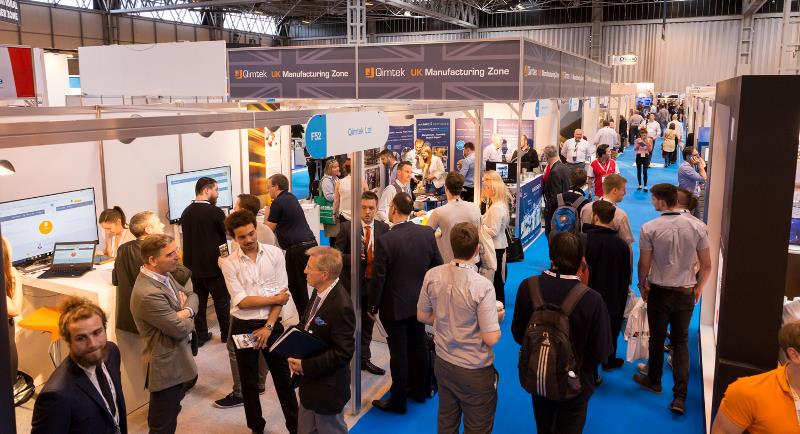
With just 10 days to go until the doors open at Subcon, the defining event in the manufacturing supply chain calendar, organisers have revealed they are preparing for a bumper year with over 400 exhibitors confirmed and 4,500 visitors expected through the doors...
This year visitors will enjoy two shows - Subcon and brand new sister event The Engineer Expo. Furthermore, a cornerstone of the expanded event will be The Engineer Conference with 36 free-to-attend sessions across two theatres.
Rolls Royce CTO Paul Stein will present the keynote within a highly-anticipated programme that also features Dr Caroline Hargrove, CTO of McLaren Applied Technologies, BAE Systems’ Dr Henry White, Dr Nadine Stech who helped to design Linx, the CTO of Fujitsu UK Graeme Wright, the AMRC’s head of digital Prof Rab Scott, Prof Dame Jane Jiang, who heads up the EPSRC’s Future Metrology hub at the University of Huddersfield and Prof Rajkumar Roy, Director of Manufacturing, Cranfield University.
These free to attend presentations will showcase cutting edge innovation and best practice from the worlds of engineering, manufacturing and supply chain management.
“There is going to be so much to talk about this year: from our research into the ignorance around Industry 4.0 and the importance of increasing the number of women in manufacturing and engineering leadership roles, to the incredible presentations across our stages and discussions throughout the stands of more than 400 exhibitors,” commented Subcon event director Gordon Kirk. 
“This year’s event, which also debuts The Engineer Expo and The Engineer Conference, is set to be our best yet and will give visitors and suppliers an unrivalled opportunity to interact with every facet of the UK manufacturing and engineering community, maintain their competitive edge, and shape how the industry is seen from the outside.”
As always, to register your attendance for free, please visit www.subconshow.co.uk


Wednesday, 23 May 2018

GUEST BLOG: “Maximum effort...” What Deadpool can teach UK businesses about insurance


Taking everyone's favourite R-rated comic book character as an unlikely inspiration, Kevin Carrabine, Group MD, Confidential Solutions Group, outlines a new approach to insurance for businesses in the engineering and manufacturing supply chain...

“We’re going to have to do this the old fashioned way…with maximum effort…”
Deadpool (2016)

It’s not normally a good idea to bring swords to a gun-fight, and yet when it comes to insurance, standing apart from the crowd is the ONLY way you’ll ever achieve the optimum result.

Why? Because the way that nearly all businesses transact insurance in the UK is broken.

UK businesses – including engineering and manufacturing companies, large and small - are making the same fundamental mistake when it comes to reviewing their insurances; costing them both potential savings and better coverage. All because they don’t fully understand how the market works.

To explain this fully, we need to get inside the mind of the person who ultimately sets the price you pay. Not the broker, but the underwriter who decides IF they will cover a business, and if yes, then at what price. Let’s call this underwriter John.

And ultimately John’s only job is to win profitable business for his employer – an insurer.

When deciding on a price to offer, the more John knows about a business, the better the price is likely to be – as unknown factors carry a premium.

Understanding an individual business takes time and effort, which is where a broker comes in.

John needs time to study a business before he can offer his best price, and if he discerns that there is a lot of competition with other insurers for the business, then he may be more likely to decide against investing any more time on it. His view is that the business will either take the first price or it won’t.

Similarly, if the broker that presents a case has a poor history of delivering sales to John, then those businesses are likely to be bumped down the pecking order.  For John, the total cost and effort of making a sale once he includes all the red herrings is simply too high.

A problem of scale

It is therefore in both yours and your brokers best interest to maintain excellent relationships with insurers so that they want to invest quality time on your business.  But the businesses carry the can for the fact that it is very difficult for a broker to maintain excellent relationships and an excellent reputation, with more than say a half dozen underwriters.

And increasing the effort by using multiple brokers plus an incumbent actually makes it worse.

This is because in an open-market tender, competing brokers will reach out to all their partner insurers with a request for quotation, hoping to get at least the same, or a better price than the other brokers. Each broker will approach as many insurers as they can and it’s not uncommon for more than 30 Insurers to be involved.  Maximum effort.  

Crucially, once an insurer has given a price, if one of their underwriters receives a similar proposal from another broker, nine times out of ten they have no choice but to offer the same price to the second broker, due to what is known as the ‘logging protocol’. What’s worse is that the same will apply when the insurer has previously refused to quote at all – even if the underwriter has an excellent relationship with the second broker – they’ll likely be obliged to pass on a ‘no-quote’ to them to.

This is why in an open-market tender, you often have insurers that won’t quote, Brokers that all come back with the same price, and endless blame-tales about how someone got there first and the market is now blocked. The result is often minimal improvements for maximum effort.

What’s worse, when the prices obtained by competing brokers are all very similar, a last ditch attempt to win the business can lead to a ‘Dutch auction’ style frenzy with each broker lowering their price (not the insurers), either by reducing their fee or in giving up commission.

Whilst this may initially seem attractive, the long-term effects of the broker bun fight can have huge negative implications for sectors such as engineering that demand a keen knowledge of the business.

There is an alternative to this broken system.

A confidential process when done right, keeps businesses off of insurers blacklists, keeps coverage superb, and premiums low.

To take one recent example of a sub-contractor we worked with, it was clear from the initial assessment that the premium levels being paid were more than excessive.

Our insurance broking firm Confidential Solutions Ltd were worried that if the insurance market became aware of the current expenditure, then there would have been less motivation for alternative insurers to provide their very best price. This was because a ‘good’ price would probably be ‘good enough’.

So instead of going to the open market, an objective price target including a significant saving was agreed along with a highly personalised service plan, and in this particular case the company appointed Confidential Solutions as their broker before they received final renewal terms from the existing broker.

"I only have 12 bullets, so you are going to have to share”

Look at what Deadpool does and (only sometimes) what he says. The trick is to work smarter and not harder. 

If you want to learn more about the truth behind the UK insurance market, or are ready to try something new, visit our website, or come and meet us at Subcon and learn about the alternative – The Confidential Review. Maximum effort is not required.

Friday, 11 May 2018

GUEST BLOG: Wondering what video analysis can do for your business?

Image result for video analysis in business 

Video analysis and intelligent CCTV cameras
The security advancements achieved through the last five years within the security and video analysis sector are major steps towards building the actual smart cities and industries ecosystems. Find how the latest video images processing technologies can be applied to your business via video analysis algorithms.

BI – Business Intelligence for industrial sites?
How to control your premises daily operation? – but for just one example – think of the costs involved in managing access control doors and ensuring all vehicles are registered and counted – Video analysis can automate these processes, reducing the annual security cost up to 40% in all levels of security. Manage and track the activity of employees, temporary visitors and monitor access and operations 24H a day.

What are the benefits of using Video Analysis?
Our R & D efforts are summarized ultimately to deliver top end solutions using innovative video analysis algorithms, empowering actual industry requirements from fire protection compliance to CCTV intruder alarms, the objective is to optimize cost and increase the security of all types of industrial premises.

Combining different analytics indicators with the right Video Management Software (VMS) video analysis can be used to manage multiple industrial processes within the same platform and one report, improving the quality of manufactured products or for example or to ensuring the access to authorised members to a processing plant having all data live, and ready to analyse.

What are the risks of not using video analysis security solutions or ignore it?
Being innovative around latest security technologies  –  means having full traceability and provenance of all your internal and external premises –   Not having a video analysis system integrated within your CCTV network means higher risks and costs. Our maintenance service ensure that all equipments work all the time, protecting your facilities and employees, empowering health and safety policies.

How important is it for engineering/manufacturing markets to have a security system that minimize risks and potential security hazards?
The key factor is to determine what type of system has to be installed to protect your company or business, perhaps one of the biggest challenges to which many large and small companies face each day. Aware of the importance of having a good alarm system that deter potential intruders, it is time to think about taking a step further and strengthen that installation, implementing video analysis and complementary control systems based in smart video cameras that analyse recorded video images and produce BI – Business Intelligence reports.

This post was written for us by Ricardo Alcalde, Marketing Online Director, Covert Security. Meet Covert at Subcon on 5-7 June - register for your free ticket now at www.subconshow.co.uk/register 

Thursday, 5 April 2018

Just three months to go till Subcon 2018


 With just three months to go, industry preparations for Subcon, the defining event in the manufacturing supply chain calendar, are now well underway.  Now in its 42nd year, Subcon returns to the NEC in Birmingham across 5th - 7th June 2018. The landmark, three-day event will arm UK manufacturing and engineering professionals with the latest manufacturing and design solutions, alongside cutting-edge developments in advanced engineering technologies.

Of the 400 world-class suppliers who exhibited in 2017, more than a third have already confirmed for this year.  This includes businesses such as Bowman Additive Production and Laser Lines, both of whom provide 3D printing services and technology.  Elsewhere, CAD / CAM specialists Smart Design Services will demonstrate how design software can increase design efficiency and other software providers include ECI, Redthorn and IndySoft.

Other names already singed up include B.S.C (Diecasting), Carlton Die Casting, Cooper Brown Enterprises, Lucy Group, Timsons Engineering, Cogent Technology and measurement and metrology specialists such as Hexagon, Faro and Zeiss. 

The 2018 event will see a range of new pavilions, highlighting deep, last-mile expertise and providing keenly focused, industry specific solutions for metals, transport, materials, electronics, automotive, aerospace and energy sectors.

Also new for 2018, Subcon will be co-located with The Engineer Expo to create the first, truly cross sector industry event with visitors able to enjoy unlimited access to both shows. This will enable engineering and manufacturing visitors alike to see how they can optimise production and process throughout the design and manufacturing cycles.

A six-stream, 36-session conference programme will be held across two theatres.  A key theme of the event will be developing cross-sector collaboration: taking the lessons learnt from successful innovation within industries such as automotive, aerospace and defence, and applying them elsewhere to create true competitive advantage.

Speakers will include leaders from some of the biggest, most established names in UK engineering and manufacturing, alongside innovators from disruptive start-ups. Topics will include the latest Smart Factory developments, real world applications of the Internet of Things (IoT), advanced integrated circuits (ICs), sensing, measurement and process control, materials design, synthesis and processing. Elsewhere, expert panels will explore the potential of sustainable and additive manufacturing as well as showcasing industry case studies in cross sector collaboration and open innovation.

“2018 has already seen an incredibly strong start for UK manufacturing and engineering,” said Gordon Kirk, event director, Subcon.  “UK manufacturing output is expanding at its fastest rate since early 2008. November 2017 saw a seventh consecutive month of growth, so it is no wonder we are seeing such strong interest so early on, especially as this year Subcon will combine with The Engineer Expo to create the first truly cross sector event.”

To register your attendance at Subcon 2018 please visit www.subconshow.co.uk

Thursday, 25 May 2017

GUEST BLOG: Establishing a base camp for your digital journey through predictive modelling


Leading firms in automotive and manufacturing have deployed predictive simulation models to ask and answer major business process change and new technology investment questions for decades. Unlike many other predictive analytics technologies, predictive simulation has been deployed at scale for many years by these firms and has been embedded as business as usual by many for major capital expenditure decisions. Many less structured firms have avoided using such technologies, preferring to rely on experience and intuition; however, time is fast running out for gut-feel management as operations become more complex, connected and agile. 

The implementation of Industry 4.0 naturally generates similar opportunities, risks and business questions to the implementation of new technologies in the past. It’s therefore reassuring to know that well-proven software technology is available that can provide a highly visual predictive model of your business and gage the impact of different implementation options. By capturing your business logic, rules, assets and processes within a digital model, businesses can access a visually rich and statistically accurate method for testing their investment options and future changes across their organisation.

These models are able to simplify complex operational behaviours. The future-state data they provide is ideal for empowering clearer planning decisions, building comprehensive cost justifications and managing many of the risks associated with change. For these reasons alone predictive simulation offers an ideal starting point when considering investments in digital transformation through the application of Industry 4.0 technologies.

For many, a real value-add from a predictive simulation model is its ability to understand the complex dynamics of the current-state business before moving towards full digitisation.  Capturing processes and data in a visual, dynamic model secures the cross-functional engagement needed to establish effective strategic alternative investment options.  As investments in new Industry 4.0 technologies are made, the data driving such models can be refined via operational data sources such as those provided by modern equipment and real-time data sensors. As the level of digitisation progresses the model can hook into increasingly accurate and timely data flows providing both enhanced predictions based on business plans but also a real-time ‘digital twin’ representation of current operations and schedules.

A predictive digital twin is capable of showing the current state of the business across different media, offering management a view of the business that surpasses traditional reports. Options include 3D visualisation, augmented and virtual reality and dashboards that not only show key performance indicators, but allow individual points of interest to be examined in detail, drilling down into deep business data. Such dashboards can use predictive data to alert when and where potential future problems may occur. Using the right Industry 4.0 technologies, they can even provide the controls necessary to invoke remedial action. This form of dashboard will increasingly become the digital control panel or ‘predictive management cockpit’ for tomorrow’s operations managers.


Hayward Tyler, a designer and manufacturer of mission critical pumps and motors, used this technology to create a digital twin of their manufacturing facility. This award winning approach demonstrated how the factory would operate before it was even constructed and validated the development of a new carrier transportation, designed specifically to improve throughput throughout the facility. The predictive simulation technology is currently being developed to improve production scheduling capability to keep customers informed of when they can expect to receive their orders.

This post has been written by Andrew Aitken, COO, Lanner who are exhibiting at Subcon 6-8 June at the NEC. Register now for a free visitor pass at www.subconshow.co.uk