Friday, 25 May 2018

T minus 10 and counting...


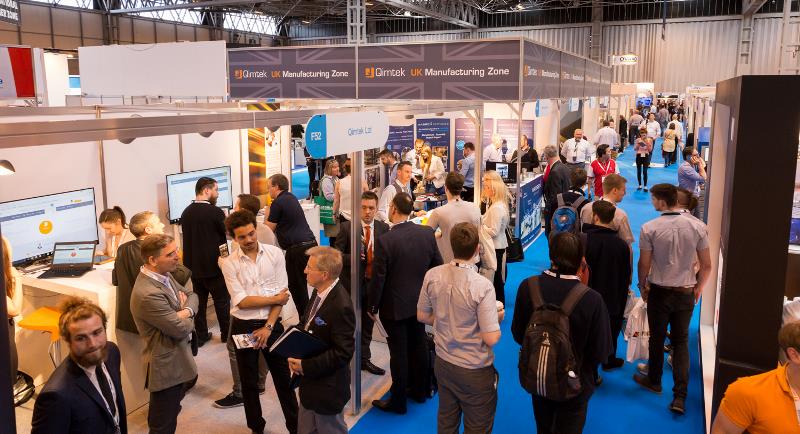
With just 10 days to go until the doors open at Subcon, the defining event in the manufacturing supply chain calendar, organisers have revealed they are preparing for a bumper year with over 400 exhibitors confirmed and 4,500 visitors expected through the doors...
This year visitors will enjoy two shows - Subcon and brand new sister event The Engineer Expo. Furthermore, a cornerstone of the expanded event will be The Engineer Conference with 36 free-to-attend sessions across two theatres.
Rolls Royce CTO Paul Stein will present the keynote within a highly-anticipated programme that also features Dr Caroline Hargrove, CTO of McLaren Applied Technologies, BAE Systems’ Dr Henry White, Dr Nadine Stech who helped to design Linx, the CTO of Fujitsu UK Graeme Wright, the AMRC’s head of digital Prof Rab Scott, Prof Dame Jane Jiang, who heads up the EPSRC’s Future Metrology hub at the University of Huddersfield and Prof Rajkumar Roy, Director of Manufacturing, Cranfield University.
These free to attend presentations will showcase cutting edge innovation and best practice from the worlds of engineering, manufacturing and supply chain management.
“There is going to be so much to talk about this year: from our research into the ignorance around Industry 4.0 and the importance of increasing the number of women in manufacturing and engineering leadership roles, to the incredible presentations across our stages and discussions throughout the stands of more than 400 exhibitors,” commented Subcon event director Gordon Kirk. 
“This year’s event, which also debuts The Engineer Expo and The Engineer Conference, is set to be our best yet and will give visitors and suppliers an unrivalled opportunity to interact with every facet of the UK manufacturing and engineering community, maintain their competitive edge, and shape how the industry is seen from the outside.”
As always, to register your attendance for free, please visit www.subconshow.co.uk


Thursday, 24 May 2018

From defence to sport, the fascinating world of technology transfer


Henry White is BAE UK Sport Partnership Engineering Lead at BAE Systems. He is talking at The Engineer Conference at Subcon on 7 June. We have interviewed him ahead of the event about everything from technology transfer to badly designed hand driers. You can register for free to hear from speak at www.subconshow.co.uk/register 

How can technology from defence be transferred to the world of sport?
Technology can be transferred from defence to many adjacent areas and elite sport is certainly one of these. The 10 year-long Engineering Partnership between BAE Systems and UK Sport has seen many examples of successful technology transfers.
Advanced materials, high precision sensing systems and specific display technologies are three areas where there are many applications within both sport and defence.
The partnership has been so successful in no small part because of the wide range of expertise that exists within BAE Systems.

What applications can it be used for? 

Sport is by necessity governed by rules which in many cases restrict the extent that technology can be utilised in competition. However, there is much more freedom to use technology in training.

One challenge when introducing technology into training is making sure that athletes feel the same way as they would during competition. For example, having a bicycle with integrated sensors and feedback to the cyclist would not be allowed in competition, so if such a system was useful during training, the feel of the bike would need to be the same as competition bike.

Despite this, there are very few sports where technology can’t help athletes train to perform at their best. Through our partnership with UK Sport, so far we have assisted about 30 sports and over 250 athletes.

Where sports equipment can be made by national teams within the governing rules, aerospace materials knowledge can quickly be adapted and applied to the various sports. Skeleton sleds and racing wheelchairs are two such examples.

We have also applied to a number of sports our knowledge on visualisation techniques that we are developing for aircraft design and maintenance. This is where understanding the correct level of information to be relayed to athletes is important.

Additionally, sensor systems are a major part of aerospace equipment that also feature in a range of sports equipment such as vests used in Taekwondo.

What will delegates take from your presentation?

Delegates will gain an understanding of the mechanism of the BAE Systems and UK Sport partnership and the mutual benefits of applying technology to an adjacent area. As well as technology developments, the partnership has proved to be an excellent way of communicating how rewarding careers in both engineering and sport can be.
The presentation will also include some specific examples of completed projects and give an insight into where we at BAE Systems see future interaction between aerospace and sport.

What would you put in Engineering Room 101?


I would put some of the modern hand-driers in Engineering Room 101! Whilst these are excellently engineered products that dry hands very efficiently, in a number of cases that is all that has been considered. The water drips onto the floor and I have also seen some rather impressive stalagmites begin in some cases. My main bugbear though is that I often want to freshen up by washing my face and then what do you do? You could get a nasty injury from trying to get your head into one of those! So as in most cases, it is not the engineering that is at fault, it is the design that stops the technology being as useable at it could be. Understanding the human interaction is vital.